 Ελληνικά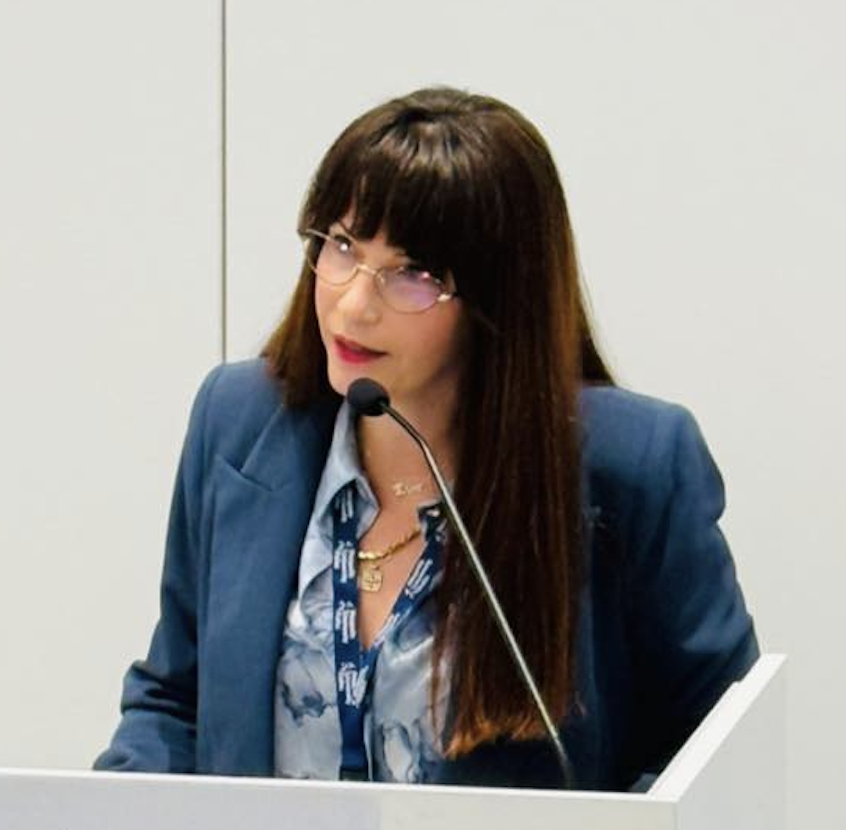
Read Elena's inspiring story below!
Expertise
What is your role, job title, and field of expertise?
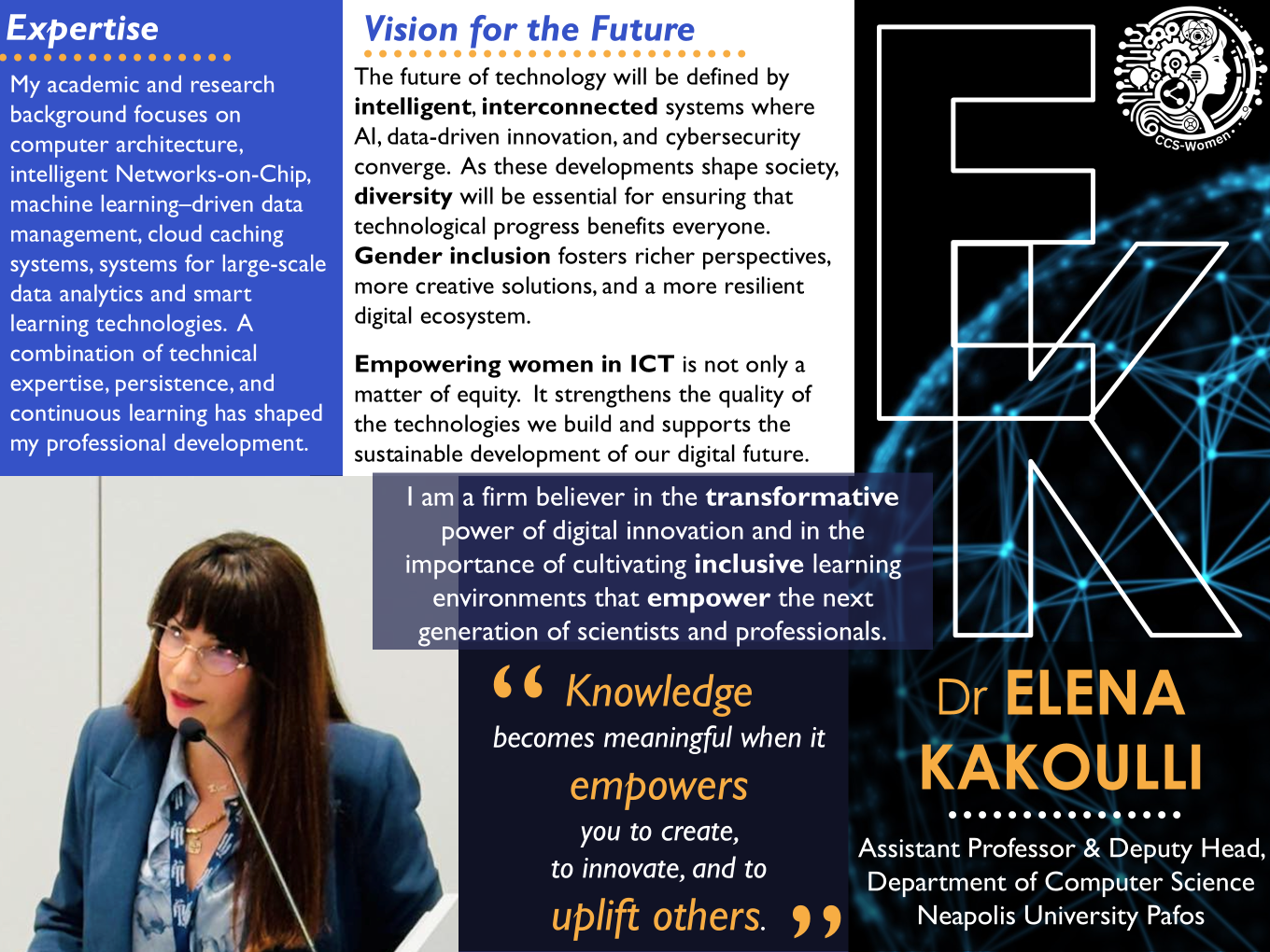
I am Elena Kakoulli and I am an Assistant Professor and Deputy Head in the Department of Computer Science at Neapolis University Pafos and Coordinator of the MSc in Information Systems and Digital Innovation. My academic and research background focuses on computer architecture, intelligent Networks-on-Chip, machine learning–driven data management, cloud caching systems, systems for large-scale data analytics and smart learning technologies. Over the past years, I have served in multiple research teams, contributed to European and national projects, and published in leading journals and conferences. I am a firm believer in the transformative power of digital innovation and in the importance of cultivating inclusive learning environments that empower the next generation of scientists and professionals.
Inspiration
What sparked your interest in this technology field and what path led you here?
My interest in technology began at a young age, driven by curiosity about how complex systems function at their core. During my studies in Computer Science and Computer Engineering at the University of Cyprus and Cyprus University of Technology, I became fascinated by computer architecture and the challenge of designing efficient and intelligent systems. This interest led me to pursue a PhD in Networks-on-Chip and multicore architectures, fields that combine theoretical depth with impactful real-world applications. My academic path evolved through research roles in high-performance computing, big data platforms, machine-learning-driven systems, and distributed environments. Each step reinforced my commitment to advancing innovation while supporting greater inclusion within the ICT community.
Career Growth
What skills and strategies have helped you succeed in tech?
A combination of technical expertise, persistence, and continuous learning has shaped my professional development. I prioritise interdisciplinary thinking, embracing both low-level system design and data-driven intelligence, which allows me to approach problems holistically. Equally critical has been the ability to collaborate effectively, across academia, research teams, and industry partners. Strategic time management, adaptability to emerging technologies, and a commitment to mentoring students and young researchers have also played an essential role in maintaining steady growth in a demanding and rapidly evolving field.
Memorable Achievements
Share a project or moment that reflects the impact of your work.
One of the most meaningful milestones was contributing to ML-SMACC, a machine-learning-driven data management framework for cloud caching systems. This project demonstrated how intelligent storage decisions can significantly improve data accessibility and system performance. Another defining moment was my invitation to present at the International Workshop on Network-on-Chip Architectures (NoCArc) held at MICRO, where I shared a systematic review of intelligent NoC architectures. These experiences validated the research impact of my work and highlighted the importance of scientific contribution to emerging computing paradigms.
Challenges
How do you stay ahead in a competitive field, and what obstacles have you overcome?
Staying ahead requires constant learning, openness to new methodologies, and active engagement with the academic and scientific community. Like many women in ICT, I have navigated environments where representation is limited, which reinforced my commitment to persistence and self-advocacy. Balancing demanding research, teaching responsibilities, and leadership roles has also brought challenges, but it has strengthened my capacity to prioritise, adapt, and maintain resilience in high-pressure contexts.
Work-Life Balance
How do you manage the demands of career and personal life?
Achieving balance requires intentional boundaries and clear prioritisation. I organise my time around focused research periods, dedicated teaching commitments, and opportunities for personal rejuvenation. Maintaining a supportive network, both professionally and personally, has been essential. I view work-life balance not as a fixed state but as an ongoing process of aligning responsibilities with personal well-being and long-term goals.
Personal motive
What’s your motto?
“Knowledge becomes meaningful when it empowers you to create, to innovate, and to uplift others.”
This mindset has guided my academic path and reflects the belief that technology becomes truly impactful when used to support people, communities, and equitable opportunities.
Future
How do you envision the future of technology and what role can gender diversity and inclusion play?
The future of technology will be defined by intelligent, interconnected systems where AI, data-driven innovation, and cybersecurity converge. As these developments shape society, diversity will be essential for ensuring that technological progress benefits everyone. Gender inclusion fosters richer perspectives, more creative solutions, and a more resilient digital ecosystem. Empowering women in ICT is not only a matter of equity, it strengthens the quality of the technologies we build and supports the sustainable development of our digital future.